
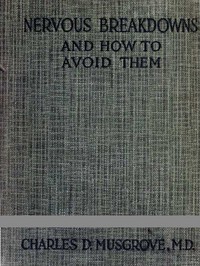
Nervous Breakdowns and How to Avoid Them by Charles David Musgrove
Let's be honest, the title sounds like something your great-grandma might have hidden on her shelf. But Charles David Musgrove's book is anything but dated. It's a modern, compassionate, and incredibly practical guide to understanding the immense pressure we put on our own minds.
The Story
This isn't a book with a plot in the traditional sense. Instead, it's a journey into the inner workings of stress and resilience. Musgrove begins by demystifying what a 'nervous breakdown' actually is—breaking it down from a scary, vague concept into understandable stages of mental and physical exhaustion. He then walks you through the common paths that lead people there: the perfectionism trap, the inability to say no, the glorification of busyness, and the neglect of basic physical needs like sleep and nutrition. The second half of the book is the roadmap out. It's filled with straightforward, actionable strategies for building mental 'circuit breakers,' setting real boundaries, and retraining your brain to handle pressure without crumbling.
Why You Should Read It
I picked this up during a particularly hectic month, expecting a quick fix. What I got was something much better: a new framework for thinking about my own limits. What makes it work is Musgrove's tone. He's never judgmental or alarmist. He writes with the calm confidence of someone who understands the struggle because he's navigated it himself. The advice feels doable—small, consistent adjustments rather than overwhelming life overhauls. The chapter on 'The Myth of the Productive Breakdown' alone was a revelation, challenging the idea that we do our best work when we're burned out.
Final Verdict
This is the perfect book for anyone who feels constantly wired but tired, who says 'I'm fine' through gritted teeth, or who manages other people's crises while ignoring their own simmering stress. It's especially valuable for high achievers, caregivers, and anyone in a fast-paced job who thinks grinding 24/7 is a badge of honor. If you've ever felt like you're running on fumes and are ready for a compassionate, smart guide to building a more sustainable way of living, this book is your first, best step.
This text is dedicated to the public domain. It is now common property for all to enjoy.
Sarah Jones
2 years agoA must-have for graduate-level students in this discipline.
Michael Martin
9 months agoI started reading this with a critical mind, the critical analysis of current industry standards is very timely. A trustworthy resource that I'll keep in my digital library.
Mary Martinez
7 months agoI took detailed notes while reading through the chapters and the logic behind each conclusion is easy to follow and verify. I'm genuinely impressed by the quality of this digital edition.
Sarah Lee
1 year agoThe author provides a very nuanced critique of current methodologies.








Margaret Jackson
2 years agoThe layout of the digital version made it easy to start immediately, the author doesn't just scratch the surface but goes into meaningful detail. I'll be recommending this to my students and colleagues alike.